Pisco Elqui in the Atacama Desert
By Grace W.
Nov. 19, 2026
My first time on an overnight bus was about as expected. From Santiago to La Serena is a nine-hour bus ride, and I slept a little, but not very well. The difficult part was arriving at La Serena at 5 a.m., then doing a full day of touring until 10 p.m. This way, the four-day weekend became essentially two 48-hour days with the long bus rides. Once we got to La Serena, we explored a little and went to the ocean before things opened for the morning and we traveled to the Valle de Elqui via the Ruta de las Estrellas.


One of our motivations and the reason this valley is famous is because it was the first Dark Sky Zone in the world and you can often see the Milky Way. Unfortunately, during our entire trip it was cloudy and we didn’t see any stars.
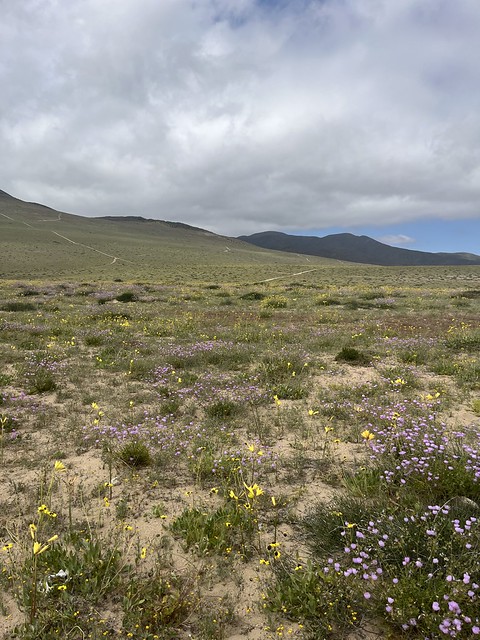
Thankfully, we also went to see the flowering desert, which only happens every five to seven years when there is a higher-than-usual amount of rain in the Atacama Desert, otherwise the driest non-polar desert in the world. It happened this year, and we did get to see it. The ground is covered with various plants, flowers and cacti, many of which are endemic. It is so beautiful, especially with the desert mountains in the background.

The rest of the time, we went to various artisan markets, which are like craft fairs in the Midwest, and they sell various magnets and stickers, knit sweaters and hats, herbs and tea, and jewelry. My favorite was the market in Horcón, which is set up in permanent buildings and has a great variety of products and ice cream. After living in Valparaíso and traveling to Buenos Aires, I was ready for some nature and the Atacama was worth it, even if it was too cloudy to see the stars. I would love to go back to go stargazing, but the scenery was still beautiful and there were so many cute towns to see.